Earlier this year, Eli Lilly partnered with OURA to help patients on its GLP-1 drugs like Mounjaro track their health more closely on the OURA app. Whilst both companies quickly confirmed no data would be shared between them (unless the user gave permission do to so), this deal sits inside a much bigger health tech shift. Wearables are becoming a part of how medicines are developed, tested and delivered – but what of the biases in the data collected?
The Affordability & Access Barrier
The Lilly-OURA investment is a perfect example of the stacked access to healthcare barrier. GLP-1 access is already limited in the UK due to strict NHS eligibility criteria, leading to fragmented access through expensive private pathways and questionable off-market alternatives (which is a separate issue I have previously analysed). The OURA smart ring 5 has a £399 upfront cost and subsequent £5.99/month payment for the subscription which is necessary for the wearable’s functionality. Whilst many see them both as valuable healthcare investments, the combined annual cost reaching thousands of pounds is a costly investment many cannot comfortably afford in the current economic climate.
This is not an unknown concern. In a recent YouGov survey, 59% of participants found wearable devices too expensive with 54% stating they don’t currently use any wearable device (66% of whom were aged 55 or above). Only 2% of participants owned a smart ring. A parliamentary report found that wearables tend to be purchased by people who are already health-conscious, and so the benefits may be unevenly distributed if only affluent users can afford devices, particularly if pricier models offer better diagnostic features. The same report also suggests that wearables may not help those who would benefit from them most if the devices are unaffordable, inaccurate or challenging to use for certain groups e.g. aged 55 or above.
Access to wearables as a health investment relies on the user having the financial means to make the upfront cost, recurring subscription upgrades to unlock better features and a modern smartphone with reliable connectivity to run the associated app and track their data. These are luxuries not every household has. So for patients who are already priced out of self-pay GLP-1 access and don’t meet NHS eligibility criteria, tracking their health through wearables is not a realistic option.
The Data Biases
Since 2001, more than a thousand interventional drug development trials have incorporated data from wearable devices to measure drug effects, dosages, adherence and optimal delivery methods. A 2024 peer-reviewed article in the journal Clinical Trials found that nearly 3,000 studies incorporated wearable devices by August 2022, including ActiGraph, Apple Watch, FitBit and Garmin – many of which are now considered standard tools in decentralised clinical trials, valued for their ease and quality of data collection.
The people generating this data are largely those who already own, or can afford to own the wearable device in question – pricing out those who cannot. Parliament’s own research office already outlined the risk of data compiled from users of premium brands possibly consisting of young, wealthy and technologically-proficient population, with consequences to the overall population. This theory is backed by evidence with multiple studies demonstrating the use of wearables declining with age due to disinterest or lack of health tech literacy. In an era where chronic illnesses are most common in adults aged 65 and older, how useful is the data generated from wearables, when those who would benefit most don’t use the devices?
Biases also extend to physical traits like skin tone. A 2024 government review into equity in medical devices found that the type of optical sensor used in wearable devices to detect and measure blood oxygen levels, overestimated oxygen levels in users with darker skin tones. This could lead to anxiety around readings and suboptimal treatments if dangerously low oxygen levels were missed. Gender biases also appear, as physical activity tracking remains largely understudied in women compared to men – a problem echoing across from all aspects of medical research, with reference ranges extrapolated from male physiology, universally applied to all. I found that many of the studies listed on ClinicalTrials.gov involving wearables had more male participants than women.
Where AI models are trained on such datasets, they risk inheriting the same biases, particularly when algorithms are trained on unrepresentative health data, only widening healthcare inequality rather than reducing it.
Even when wearable data is accurate, there are a number of external factors contributing to an individual’s health, that cannot be measure by a device – stable income, low-stress career and access to whole foods may show stronger biometric improvements than someone without access to these advantages. Thus making it harder to estimate the drug’s actual effect. If wearables and future models are trained on data from people who can afford the device, medication (such as Mounjaro) and the lifestyle, there is a major risk in socioeconomic privilege being mistaken for pharmacological impact.
What Does This Mean For The NHS?
The UK government’s 10 year health plan outlines aims to shift care “from hospital to community, from analogue to digital, and sickness to prevention” – wearables are included as part of that shift to encourage healthy behaviours, detect health issues early on, and to help manage long term conditions and treatments. In 2022, NHS England outlined aims to integrate wearable data into the NHS app to guide prompt GP appointments in response to health conditions line high blood pressure.
A key component for this to work is trust. Generally, users trust the data generated by their devices – particularly as the associated apps display them in clear view for users to see. However, regarding data privacy, trust is fragmented and is linked to socioeconomic status with those in senior or managerial positions being most comfortable with data sharing, compared to those out of work or depending on government support. Data privacy concerns within the NHS app have recently come under fire, with MPs demanding more scrutiny with data use. This will no doubt need to be applied to the data collected by wearable devices.
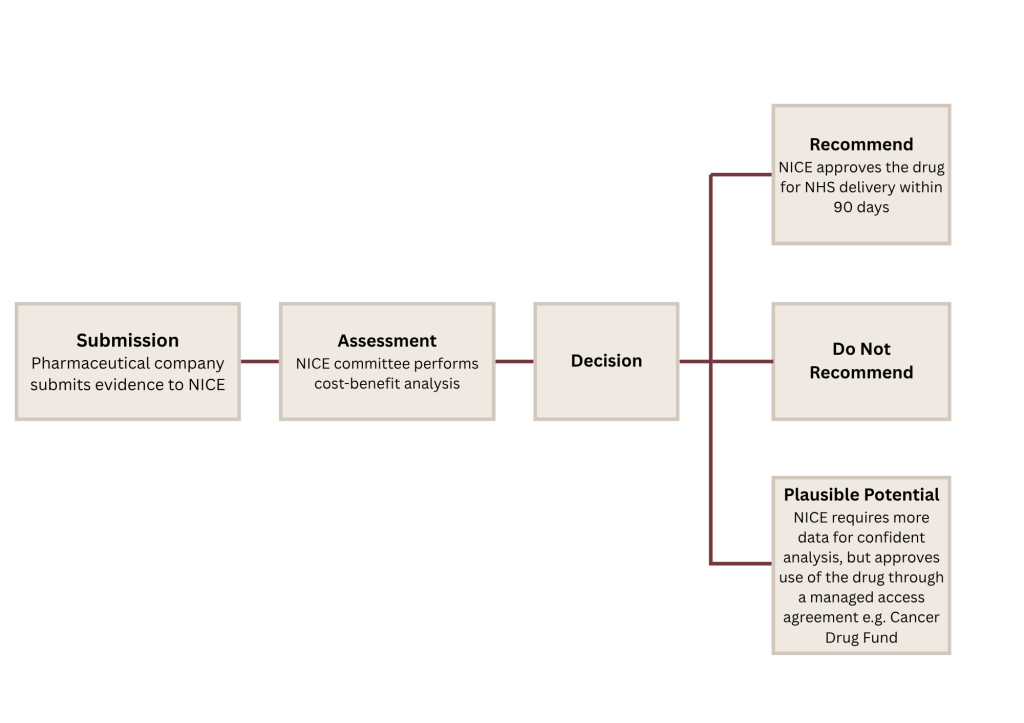
A concern raised by healthcare experts is the lack of scrutiny wearables are subjected to, compared to medical devices and new medicines. There is no equivalent to NICE’s public and intense assessment of who receives a treatment and at what cost, or MHRA’s regulation on safety or security. As the leading provider of health in the UK, the NHS has a responsibility to ensure any guidelines involving wearables is backed by strict regulation and healtgcare equity.
So, Where Do We Stand With Wearables?
There is no question that wearables have the potential to transform all aspects of the healthcare system – from data collection to generation and interpretation, all culminating in the advancements of life saving treatments. But all change comes with challenges, which are yet to be teased out when it comes to wearable devices.
The issues I have highlighted in this article, have already been flagged by research bodies and our own Parliament. Whilst wearables are shaping drug development, healthcare digital strategies, and the pipeline of future medical innovations, there are biases towards the younger, healthier, wealthier and more literate population, compared to those who would truly benefit within this aging population.
And whilst the solution is not simple, equitable access is possible through deliberate intervention. Wearable devices should be held to similar regulatory standards as medical devices, with accessibility determined through NICE-like assessments. This would require mandatory demographic requirements including age, ethnicity and gender to be assessed. Accessibility barriers could be eased through subsidised device access for those in lower socioeconomic brackets or dependents with guided support to improve health and tech literacy. And whilst the NHS is digitising, and is exploring ways in which to incorporate wearables data into their own infrastructure, accountability from both the users and healthcare providers will for mutual trust as the solid foundation for a digital era.